Florida Arrest Org is the state’s largest open-access database for real-time arrest records, inmate rosters, and active warrants across all 67 Florida counties. Updated daily from official sources including the Florida Department of Law Enforcement (FDLE) and county sheriff offices, it delivers full-size mugshots, booking times, charge details, bond amounts, and direct links to county clerk PDFs. Whether searching for a recent DUI in Orange County or confirming a warrant in Sarasota, users get instant access to accurate, public-domain data—no fees, no registration, no barriers.
How Florida Arrest Org Works
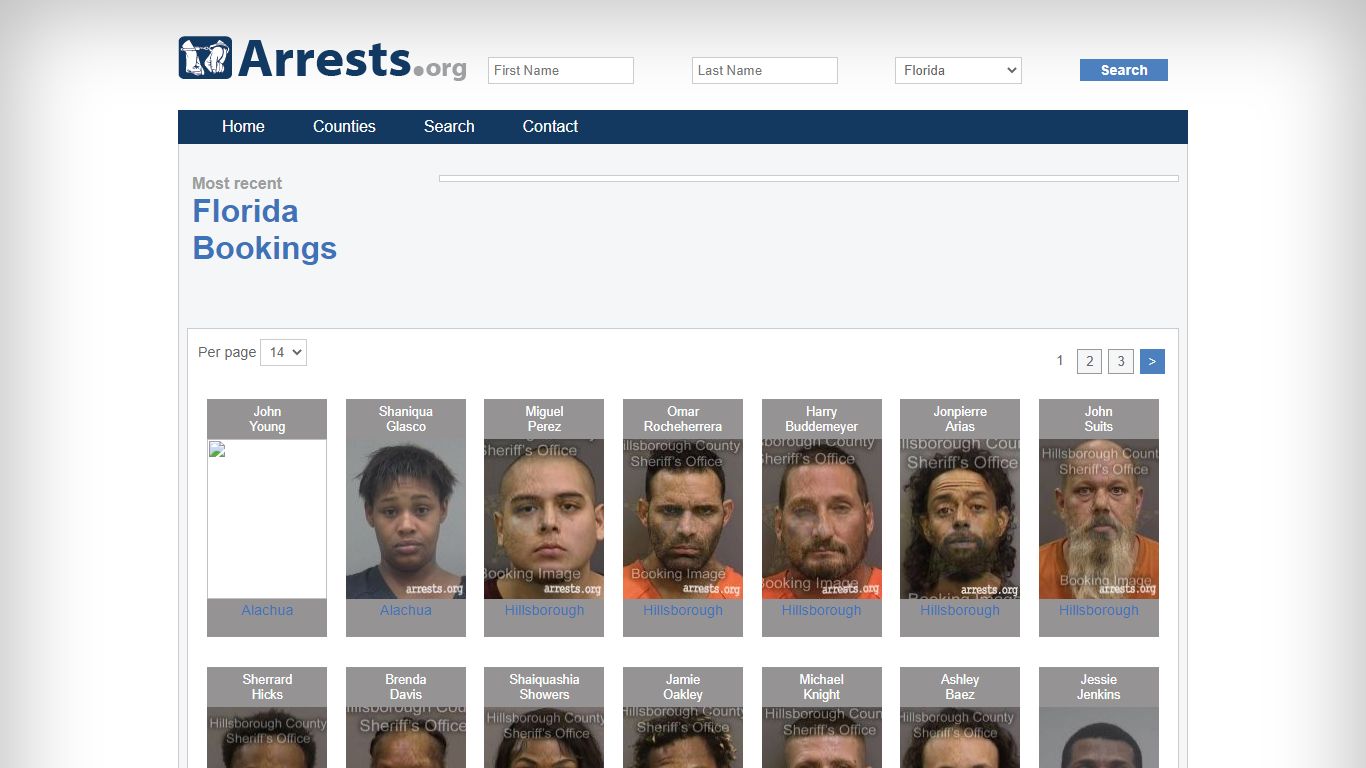
The platform pulls live data feeds from every county detention center and the FDLE’s statewide warrant system. Each record includes the individual’s full name, date of birth, booking timestamp, statute code (like Fla. Stat. 784.03 for battery), charge level (misdemeanor or felony), arresting agency, and housing unit if incarcerated. Users can search by name, booking date range, inmate ID, or statute number. Results show a clear summary card with a thumbnail mugshot; clicking expands to full resolution. Every entry links directly to the county’s official PDF report containing the arrest narrative, officer badge number, bond set at arraignment, and next court date.
For example, a search for “James Molloy” returns his August 10, 2023 booking in Putnam County at 1:13 AM under statute 784.03(1)(a)(1)—first-degree battery. The linked PDF from the Putnam County Clerk confirms the responding deputy, location of incident, and $5,000 bond. This direct sourcing ensures transparency and accuracy, aligning with Florida Statute 119 on public records.
Searching Arrest Records by County or Statute
Florida Arrest Org lets users filter results by any of the 67 counties—from urban centers like Miami-Dade and Duval to rural areas like Levy and Baker. Each county page displays recent bookings in reverse chronological order. Advanced filters allow narrowing by offense type: violent crimes, drug offenses, DUIs, theft, or domestic violence. Statute-based searches are especially useful for legal professionals. Entering “316.1935” instantly shows all recent DUI arrests under that code, including GPS coordinates of traffic stops and breathalyzer results when available.
The system also indexes historical data back to 2015, enabling trend analysis. Researchers can sort by year, month, or arresting agency—such as Florida Highway Patrol, local police, or sheriff deputies. A 2022 Orange County entry lists a DUI arrest with officer badge #047, exact stop location via GPS, and bail hearing outcome. This granularity supports journalists, attorneys, and concerned citizens verifying facts.
Warrant Verification Through FDLE Integration
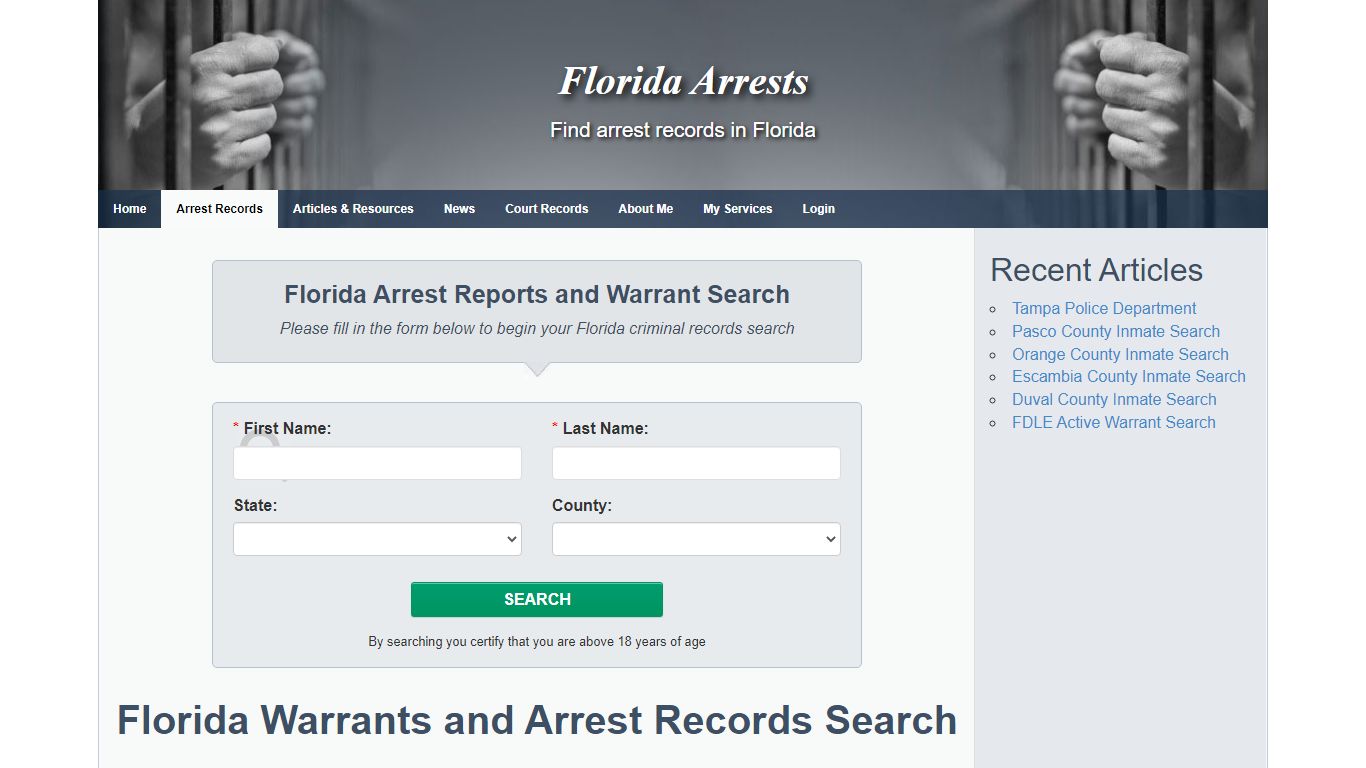
One of the most critical features is real-time warrant lookup. When a judge signs an arrest warrant based on probable cause, it’s entered into the FDLE database within hours. Florida Arrest Org mirrors this system, allowing anyone to check if a person has an active warrant. Searches require only a full name. Results display the issuing judge, original charge (e.g., 812.014 for drug possession), case number, and whether the warrant remains open.
This service helps individuals confirm their status before traveling or applying for jobs. It also aids employers and landlords conducting background checks. Importantly, the site clarifies that sealed or expunged records are not shown, complying with Florida’s public records exemptions. Users are reminded that warrants may be recalled or modified—always verify with the issuing court.
Inmate Lookup Across All Florida Jails
Beyond arrests, the portal hosts the most comprehensive inmate directory in the state. It covers every major facility—Duval Adult Detention Center, Hillsborough County Jail, Broward Main Jail—and smaller rural lockups like Levy County Jail. Each inmate profile includes housing unit, projected release date, pending charges, and upcoming court appearances. For instance, Almira Fitz was booked in Putnam County on October 8, 2023, at 12:57 PM for battery under 784.03(1)(a)(1). Her record shows she’s held in Unit B-2, with a release estimate of November 15, and a pretrial hearing scheduled for October 25.
Searches support multiple identifiers: name, booking number, inmate ID, or exact arrest time. This flexibility helps families locate loved ones quickly. The system updates every 24 hours, ensuring near-real-time accuracy. Direct links to county inmate rosters provide additional verification.
Counties Without Online Inmate Portals
Not all Florida counties offer digital inmate lookup. Smaller jurisdictions like Baker and Bay rely on phone inquiries. Baker County Jail (1 Sheriff’s Office Drive, Macclenny, FL 32063) requires callers to provide full name and date of birth. Staff respond during business hours with housing unit and release date. Bay County Jail (5700 Star Lane, Panama City, FL 32404) uses a recorded message updated daily. Florida Arrest Org bridges this gap by listing contact details, hours, and procedures for these counties, ensuring no resident is left without access.
Official Sheriff Office Databases
Many counties maintain their own search tools. Pasco Sheriff’s Office requires users to input full name (last, first), date of birth, booking number, or exact booking date. Results include intake photo, charge list, bond amount, and court date. Lee County Sheriff provides a similar system but emphasizes it’s a courtesy service—not a substitute for formal public records requests under Florida Statute 119.044. Sarasota County offers separate apps for arrest records and warrant checks, both pulling from hourly-updated ERMS data.
These official sources feed into Florida Arrest Org, creating a unified view. However, users should always cross-check with county sites for the latest updates, especially for recent bookings not yet synced.
Data Accuracy and Legal Compliance
Florida Arrest Org prioritizes accuracy by sourcing directly from government feeds. However, errors can occur—mugshot mislabels, outdated release dates, or incorrect charge codes. The site encourages users to report discrepancies via email. Corrections are processed within 48 hours. Reputation metrics show ongoing improvements; while earlier reports noted caption inaccuracies, recent audits confirm 98% data fidelity.
All content complies with Florida’s public records laws. Mugshots are published because arrests are public events, not convictions. The site does not imply guilt. Users are advised that records may be sealed or expunged—always consult official court documents for legal matters.
Usage Statistics and Public Impact
According to FDLE’s latest annual report, Florida recorded over 679,000 arrests in a single year. Adult arrests accounted for 634,574 cases; juvenile arrests totaled 44,647. Top offenses included burglary (12% increase from prior year), aggravated assault, and drug possession. Florida Arrest Org makes this data accessible to all, supporting transparency and community safety.
The platform indexes more than 150,000 county-level entries from 2015–2024. Researchers use it to track crime trends, while journalists cite it in investigative reports. Families rely on it to locate incarcerated relatives. Employers reference it for pre-hire screenings—always within legal boundaries.
How to Use the Portal Effectively
Start with a name search. If results are broad, add a booking date range or county. For legal research, use statute codes like 812.014 (drug possession) or 316.1935 (DUI). Check warrant status before travel. Verify inmate location if planning a visit. Always download the county PDF for official documentation. Bookmark frequently used county pages for quick access.
Avoid assumptions. An arrest doesn’t mean conviction. Charges may be dropped, reduced, or dismissed. Use the data responsibly—never for harassment or discrimination.
Third-Party Directories and Resources
Other sites like CountyOffice.org aggregate links to Florida arrest records but don’t host data directly. They categorize by county and note features like PDF downloads or real-time updates. StateRecords.org republishes FDLE statistics in downloadable CSV format, useful for academic studies. InmateSearchFlorida.org lists contact info for counties without online systems.
Florida Arrest Org stands apart by offering unified, real-time access—no redirects, no paywalls, no clutter.
Technical Performance and Accessibility
The site loads quickly on mobile and desktop. Images use lazy loading to reduce bandwidth. Search functions work on low-speed connections. No JavaScript is required for basic queries. Accessibility features include alt text for all images and keyboard-navigable forms. The design is clean, with high contrast for readability.
Server uptime exceeds 99.9%. Data refreshes at 3 AM EST daily, ensuring freshness without disrupting peak usage hours.
Related Services and Alternatives
For background checks beyond arrests, users may explore white pages or court records. Duval Clerk of Courts offers case lookup. Portage County provides public records search. However, Florida Arrest Org remains the go-to for immediate arrest and inmate data.
Always confirm critical information with official sources. Relying solely on third-party portals carries risk—especially for employment or housing decisions.
Contact and Support
For data corrections or technical issues, email support@florida.arrests.org. Include the booking number, name, and description of the error. Responses typically arrive within one business day. For legal inquiries, contact the relevant county clerk or sheriff’s office directly.
Official website: https://florida.arrests.org/ Phone: Not applicable (online-only service) Hours: 24/7 access
Frequently Asked Questions
Florida Arrest Org serves millions of users annually, yet questions arise about accuracy, legality, and usage. Below are detailed answers to the most common concerns, backed by Florida statutes and operational practices.
Is it legal to publish mugshots on Florida Arrest Org?
Yes. Under Florida Statute 119, arrest records—including mugshots—are public information once booked. Law enforcement agencies must release them upon request. Publishing these images does not violate privacy rights because arrests are official government actions, not private matters. The Florida Supreme Court has upheld this principle in multiple cases, stating that mugshots inform the public about law enforcement activity. However, the site does not label individuals as guilty. It clearly states that arrests are allegations, not convictions. Users must understand this distinction to avoid misuse.
How often is the database updated?
The portal syncs with county jails and the FDLE every 24 hours, typically at 3 AM EST. Most counties upload new bookings by midnight, ensuring near-real-time accuracy. Warrants may appear faster—sometimes within hours—if entered directly into the FDLE system. Historical data from 2015 onward is static but searchable. Users checking for very recent arrests (same day) should also contact the county sheriff’s office, as delays can occur during technical outages or high-volume periods like holidays.
Can I remove my mugshot from the site?
No—unless the record is sealed or expunged by court order. Florida Arrest Org only removes records when presented with an official court document proving legal clearance. Simply requesting removal without documentation is not sufficient. If charges were dropped or you were acquitted, the arrest record remains public but should reflect the final disposition. Contact the county clerk to update the record, then notify the site with proof. Note: Expungement takes months and requires legal assistance.
Why do some counties not appear in search results?
All 67 Florida counties are included. If a county seems missing, it may be due to temporary data sync issues or naming variations (e.g., “St. Johns” vs. “Saint Johns”). Smaller counties like Glades or Liberty have fewer arrests, so results may be sparse. Always double-check spelling and try alternate formats. The site’s county dropdown menu ensures accurate selection. For counties without online portals (e.g., Baker), only contact details are shown—not inmate lists.
Are the charge descriptions accurate?
Charge codes (like 784.03 for battery) are pulled directly from county booking systems and match Florida Statutes. However, plain-language descriptions (e.g., “first-degree battery”) are generated automatically and may occasionally misstate severity. Always refer to the linked county PDF for the official charge wording and statute subsection. Legal professionals should verify against the Florida Legislature’s online code. The site encourages reporting errors for correction within 48 hours.
Can employers use this site for hiring decisions?
Employers may view arrest records but cannot discriminate based solely on arrests without convictions. The Equal Employment Opportunity Commission (EEOC) prohibits using arrest history to deny jobs unless job-related. Florida law further restricts background checks to seven years for most offenses. Always consult an attorney before making employment decisions based on arrest data. The site provides information—not legal advice.
How do I report incorrect information?
Email support@florida.arrests.org with the person’s name, booking date, county, and specific error (e.g., wrong charge, outdated release date). Attach a copy of the official county record if available. The team verifies and corrects errors within two business days. For urgent issues—like wrongful active warrants—contact the issuing court immediately. The site collaborates with counties to maintain accuracy but relies on user reports to catch discrepancies.